 edudiff.com
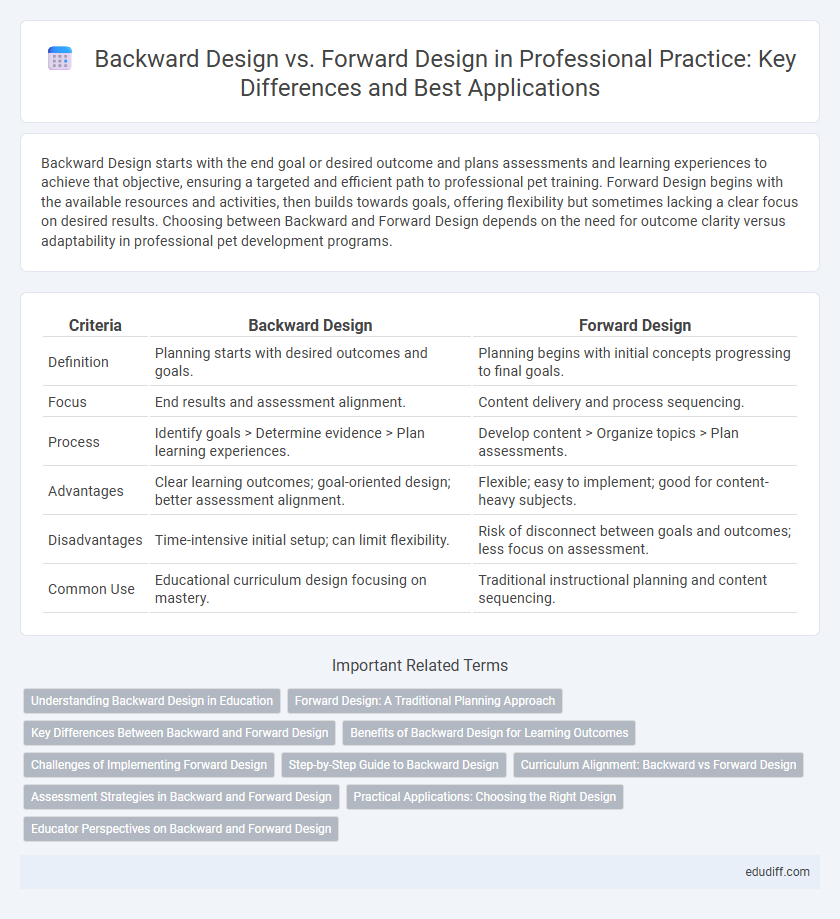
 Backward Design starts with the end goal or desired outcome and plans assessments and learning experiences to achieve that objective, ensuring a targeted and efficient path to professional pet training. Forward Design begins with the available resources and activities, then builds towards goals, offering flexibility but sometimes lacking a clear focus on desired results. Choosing between Backward and Forward Design depends on the need for outcome clarity versus adaptability in professional pet development programs.
Table of Comparison
| Criteria | Backward Design | Forward Design |
|---|---|---|
| Definition | Planning starts with desired outcomes and goals. | Planning begins with initial concepts progressing to final goals. |
| Focus | End results and assessment alignment. | Content delivery and process sequencing. |
| Process | Identify goals > Determine evidence > Plan learning experiences. | Develop content > Organize topics > Plan assessments. |
| Advantages | Clear learning outcomes; goal-oriented design; better assessment alignment. | Flexible; easy to implement; good for content-heavy subjects. |
| Disadvantages | Time-intensive initial setup; can limit flexibility. | Risk of disconnect between goals and outcomes; less focus on assessment. |
| Common Use | Educational curriculum design focusing on mastery. | Traditional instructional planning and content sequencing. |
Understanding Backward Design in Education
Backward Design in education emphasizes starting with the desired learning outcomes and then planning assessments and instructional activities to achieve those goals. This approach promotes clarity in curriculum development by aligning objectives, assessments, and teaching methods to ensure students master essential skills and knowledge. Educators using backward design enhance instructional effectiveness by focusing on measurable results and targeted learner experiences.
Forward Design: A Traditional Planning Approach
Forward Design is a traditional planning approach that proceeds sequentially from content selection to instructional activities and finally assessment development. This method allows educators to build lessons based on established objectives and available resources but may lack flexibility in addressing student needs dynamically. While Forward Design provides structure, it can sometimes result in misaligned assessments and limited opportunity for iterative refinement.
Key Differences Between Backward and Forward Design
Backward design emphasizes starting with the end goals and learning outcomes to plan curriculum and assessments first, ensuring alignment between objectives and instruction. Forward design begins with the instructional content and activities, building toward the goals as a secondary consideration, often leading to less targeted assessment strategies. The key difference lies in backward design's outcome-focused planning versus forward design's content-driven approach, which impacts coherence and effectiveness in educational program development.
Benefits of Backward Design for Learning Outcomes
Backward Design enhances learning outcomes by emphasizing clear goal-setting that aligns assessments and instructional activities, ensuring students acquire targeted knowledge and skills efficiently. This approach facilitates deeper understanding, as educators plan with the end results in mind, reducing content overload and promoting mastery of essential concepts. By prioritizing desired learning objectives, Backward Design improves curriculum coherence and student performance on both formative and summative assessments.
Challenges of Implementing Forward Design
Implementing Forward Design faces challenges such as difficulty aligning learning activities directly with desired outcomes, resulting in potential gaps in student understanding. Instructors may struggle with inflexible lesson plans that limit adaptability during instruction, hindering responsiveness to student needs. Resource allocation can also be inefficient, as forward design often requires extensive upfront planning without guaranteed effectiveness.
Step-by-Step Guide to Backward Design
Backward Design begins by identifying desired learning outcomes, ensuring alignment with educational goals and standards. Next, assessment methods are developed to measure mastery of these outcomes, providing clear criteria for student success. The final step involves planning instructional activities that directly support the attainment of targeted learning objectives, creating a cohesive and goal-oriented curriculum.
Curriculum Alignment: Backward vs Forward Design
Curriculum alignment in Backward Design starts with identifying desired learning outcomes and then developing assessments and instructional activities that directly target those outcomes, ensuring coherence and purpose throughout the course. In contrast, Forward Design begins with selecting teaching materials and activities first, which may lead to misalignment between what is taught and what students are expected to learn. Backward Design strategically enhances educational effectiveness by aligning curriculum components with clear objectives, while Forward Design risks inconsistencies in achieving desired learning goals.
Assessment Strategies in Backward and Forward Design
Assessment strategies in Backward Design prioritize identifying desired learning outcomes first and then developing assessments to directly measure those objectives, ensuring alignment between goals, instruction, and evaluation. In contrast, Forward Design often begins with instructional activities without clearly defined assessment criteria, potentially leading to misaligned evaluations that do not fully capture intended learning outcomes. Backward Design enhances the effectiveness of assessment by emphasizing outcome-based measurement, while Forward Design may rely more on formative assessments during the learning process.
Practical Applications: Choosing the Right Design
Backward Design emphasizes starting with desired learning outcomes to create focused instructional plans, making it ideal for goal-oriented projects and curriculum development. Forward Design begins with content delivery, which suits scenarios requiring sequential skill-building or step-by-step processes. Selecting the right design depends on project goals, learner needs, and assessment strategies to maximize effectiveness and efficiency.
Educator Perspectives on Backward and Forward Design
Educators often prefer backward design for its clear emphasis on defining learning outcomes before planning instructional methods, ensuring alignment with assessment goals. Forward design, while more flexible and intuitive, can risk misalignment between activities and desired educational results. Research shows that backward design improves curriculum coherence and student achievement by prioritizing outcome-driven lesson planning.
Backward Design vs Forward Design Infographic